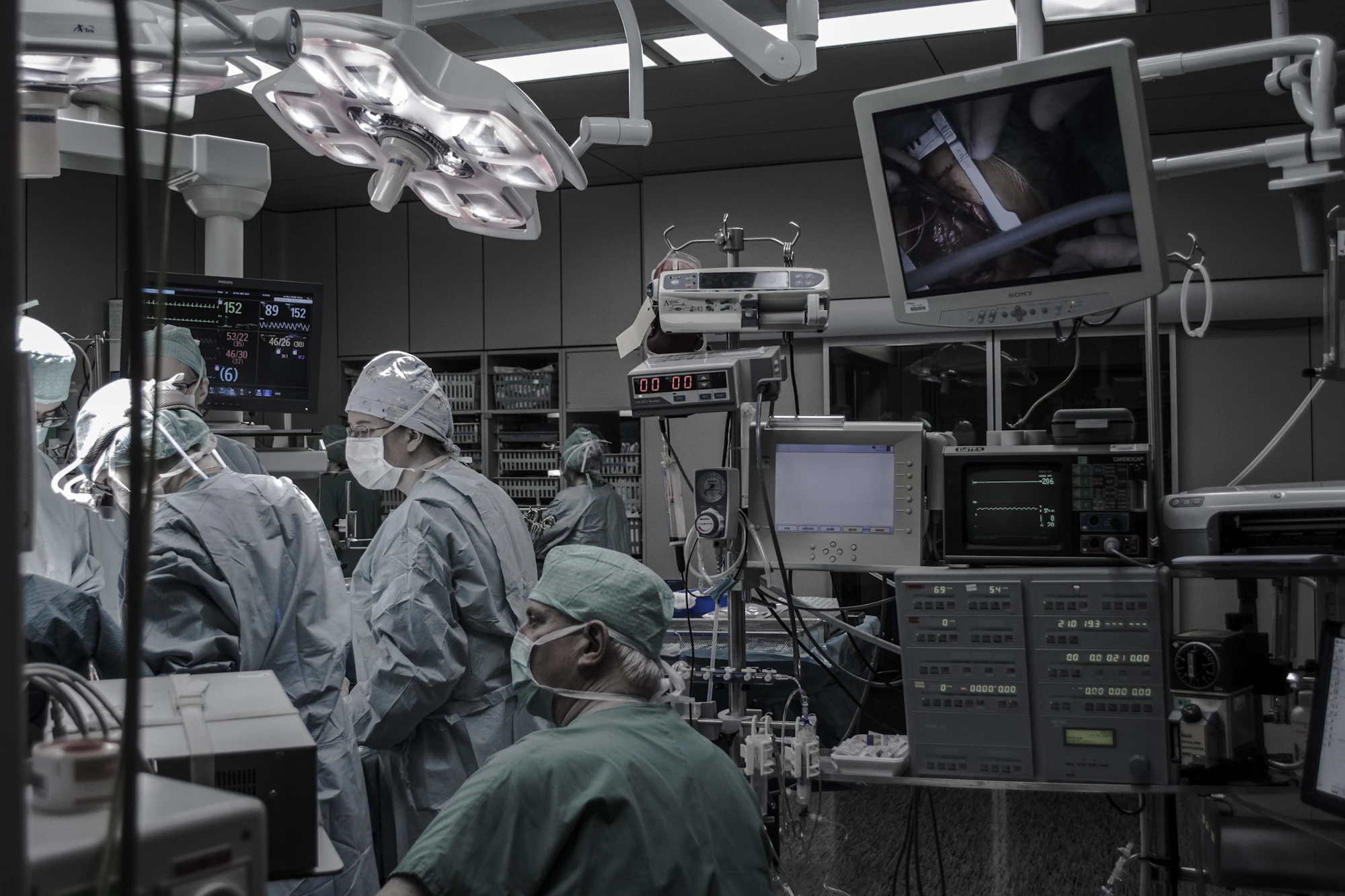
Delivering therapy changes the risk calculation entirely.
A device that acts on a patient rather than observing one moves up the risk classification and into a different regulatory and clinical evidence regime.
Energy delivery, dosing accuracy, fault detection, alarm behaviour and safe failure states become the centre of the design, not features around it.
What we build here
Six areas of therapeutic engineering.
Energy delivery and control electronics
Controlled delivery of electrical, thermal or mechanical energy, with the accuracy and repeatability the therapy demands.
Closed-loop control and sensing
Sensing that is good enough to act on, and control loops that behave predictably at the edges of their range.
Safety architecture and fault handling
Independent monitoring, defined safe states and hardware interlocks that do not depend on the main processor being healthy.
Alarms and usability under IEC 60601
Alarm systems and user interfaces designed to the collateral and particular standards from the start.
Clinical investigation for higher-risk classes
Structured clinical investigation with defined endpoints and safety monitoring appropriate to Class C and Class D devices.
Post-market surveillance
Vigilance, complaint handling and post-market clinical follow-up for devices where the safety case never closes.
Safety architecture
Designing for the failure case.
01
Defined safe states.
02
Independent safety monitoring.
03
Traceable risk controls linked to verification evidence.
In practice
Safety evidence, assembled as you build.
For an active therapeutic device the risk file is the spine of the submission. We build it alongside the design rather than reconstructing it afterwards.
- A hazard analysis traced through to verification results.
- Alarm and fault behaviour specified and tested.
- Electrical safety and EMC testing planned in the right order.
- Clinical investigation designed for the device class.

Next step
Developing a therapeutic device?
Bring us the therapy and the risk you are managing. We will tell you what the safety case will take.