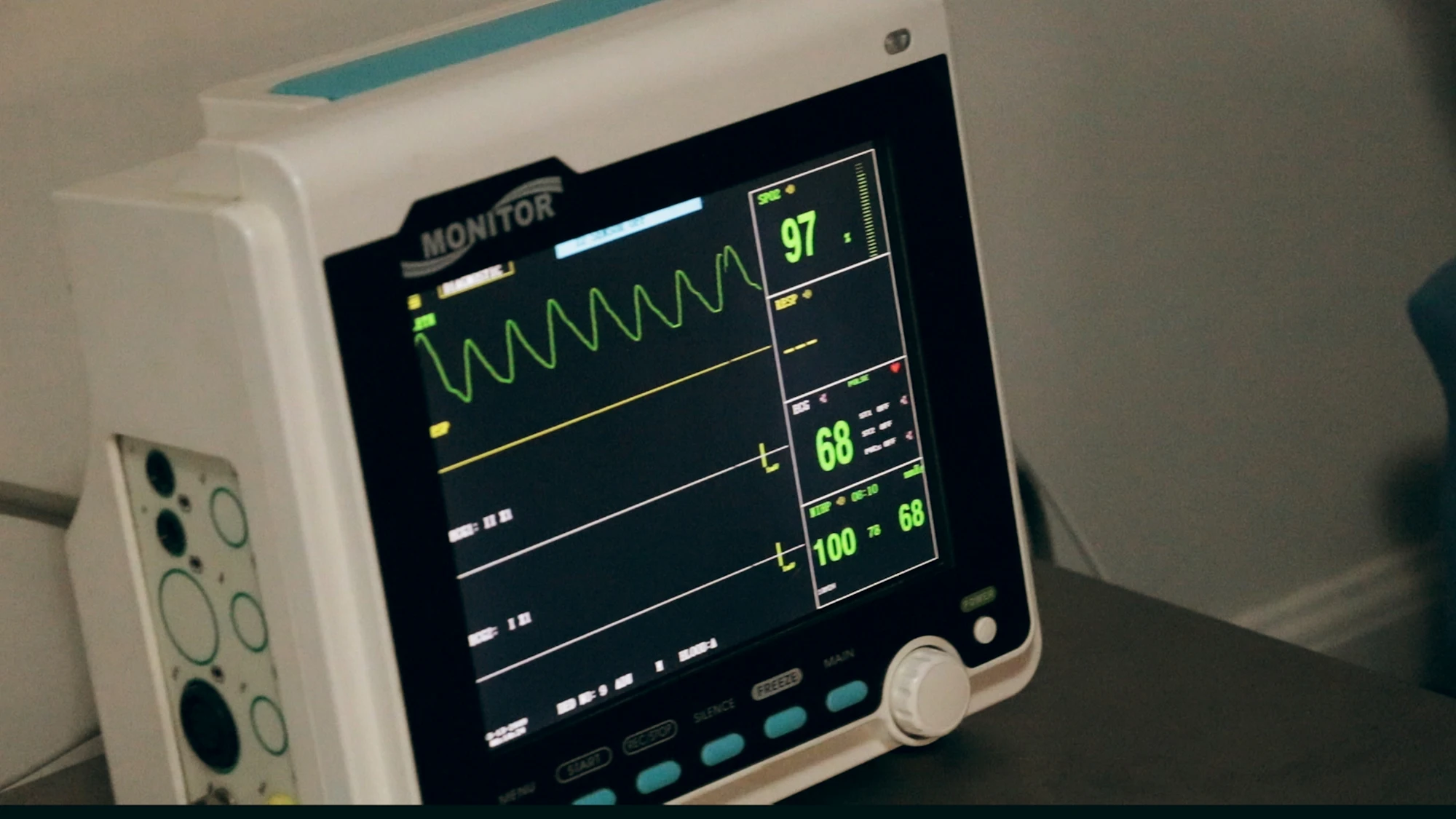
A diagnostic result is a claim, and every claim needs evidence.
Diagnostic devices carry a particular burden. The output is not a measurement, it is an input to a clinical decision.
That means signal quality, reference-standard agreement, operator variability and failure behaviour all have to be understood and evidenced before the device reaches a patient.

What we build here
Six areas of diagnostic engineering.
Biosignal acquisition
Electrode, optical and pressure front ends designed for the signal you actually need, at the noise floor real environments impose.
Sensor front-end and analogue design
Low-noise analogue chains, isolation and power management, where most of a diagnostic’s accuracy is won or lost.
Algorithm and AI-assisted interpretation
Signal processing and machine learning built as regulated software, with the training and evaluation record a reviewer will ask for.
Connectivity and data pipelines
Device to cloud to clinician, with integrity, latency and security treated as clinical requirements.
Clinical accuracy validation
Agreement and equivalence studies against accepted reference standards, run across the intended population.
Regulatory evidence for diagnostic claims
Claims written so they can be substantiated, and a technical file that substantiates them.
The evidence bar
The evidence a diagnostic needs.
01
Agreement against an accepted reference standard.
02
Performance across the intended patient population.
03
Defined behaviour when signal quality degrades.
In practice
Built for the ward, the clinic and the home.
The same device is often used by a trained operator, a busy nurse and an untrained patient. We design and validate for all three.
- Usability validated with each intended user group.
- Accuracy characterised, not just claimed.
- Failure and degraded-signal behaviour specified.
- A data pipeline that preserves clinical meaning end to end.
Next step
Building a diagnostic?
Tell us the claim you want to make. We will tell you what evidence stands behind it.